


While you buy via hyperlinks on our web site, we could earn a fee. Right here’s the way it works.
I believed my canine, Tiny, was a uncommon case. He’d eat breakfast like typical, however minutes later, I’d stroll into the kitchen to search out his complete meal, barely digested, on the ground close to his meals bowl. Tiny would lookup at me, wagging his tail and nonetheless hungry.
Was he sick? Was the meals unhealthy? I had no concept. At first, it solely occurred a few instances a month, and he appeared tremendous afterward. Then, it grew to become a routine each few days.
After some digging, I spotted I wasn’t alone. Many canine homeowners are coping with the identical messy thriller: Why is my canine throwing up undigested meals proper after consuming? I additionally found that it will possibly occur for all kinds of causes.
It’s Time To Be A CSI: Vomiting Or Regurgitation?
With many dog-related well being points, self-education and investigation are key as a pup proprietor. You could house in in your inside crime scene investigator on your furry good friend. However right here’s the place I may also help!
Earlier than you’ll be able to work out why your canine is throwing up undigested meals, it helps to grasp what’s really occurring. Inspecting canine puke isn’t anybody’s concept of enjoyable, however figuring out the distinction between regurgitation and vomiting is step one towards fixing the thriller.
Vomiting and regurgitation occur in completely other ways, so your canine’s habits may also provide some clues. Realizing which one you’re coping with could provide help to slender down the trigger and repair the issue sooner. However typically, you want your vet’s assist.
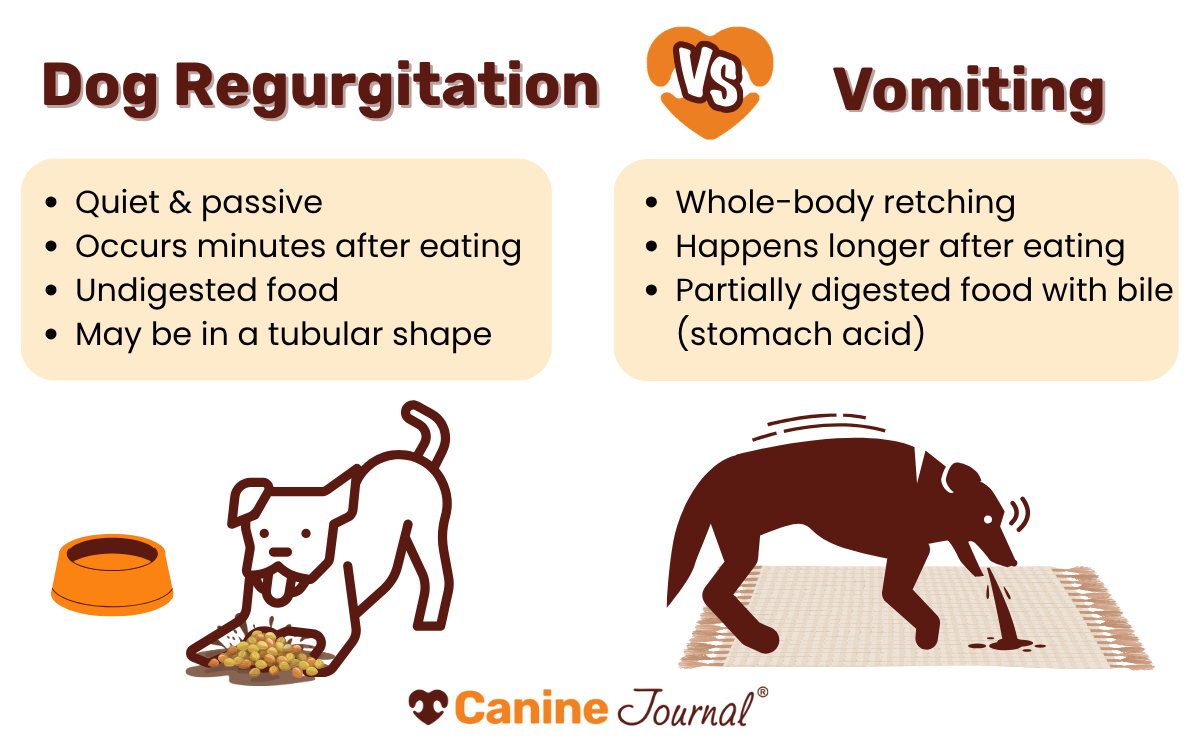
Regurgitation: A Fast Meals Rebound
Regurgitation occurs when meals comes again up from the throat or esophagus, not the abdomen or intestines. It’s normally fast and doesn’t contain heaving or nausea.
Typical indicators of regurgitation:
- Occurs inside minutes after consuming
- Quiet — no retching, heaving, or drooling beforehand
- Comes out simply, typically in a tubular or sausage form
- Meals appears practically untouched and could also be coated in mucus
- Your canine acts completely regular afterward
Merely put, the meals by no means made it to the abdomen. Regurgitation is a calm, nearly easy return of what your canine simply ate. There’s no warning, no heaving, no bile. It will probably appear like vomiting, nevertheless it’s actually extra of a rewind than a full-blown sick episode.
Vomiting: The Noisy, Intestine-Wrenching Sort of Sick
Vomiting is extra dramatic and forceful. It’s a full-body effort, normally triggered by irritation within the abdomen or intestines.
Find out how to spot vomiting:
- Occurs any time — proper after consuming or hours later
- Typically begins with lip licking, pacing, or drooling
- Includes robust belly contractions and retching sounds
- Meals is partially digested and will embrace bile (yellow or inexperienced)
- Your canine might sound nauseous or drained afterward
In case your canine is gagging, heaving, or clearly straining, it’s probably vomiting, not regurgitation. This sort of throwing up normally factors to an upset abdomen, sickness, or a extra critical underlying difficulty.
Vomit shade typically issues, too. Yellow or inexperienced typically means bile and will level to points like gastritis. Purple or black may very well be indicators of one thing extra critical. See our canine vomit shade information to be taught extra.
In case your canine vomits repeatedly, it’s time on your vet to analyze.
Purple Flag! When Throwing Up Undigested Meals Is A Life-Threatening Emergency
Massive, deep-chested canine are susceptible to gastric dilatation-volvulus (GDV), additionally known as canine bloat. It happens when a canine’s abdomen fills with fuel, meals, or fluid after which twists on itself, chopping off blood provide to the abdomen and different very important organs.
GDV may cause a canine to regurgitate meals as a result of the abdomen will get reduce off from the esophagus when it twists. This situation is a medical emergency requiring fast veterinary consideration. Breeds at a excessive threat for GVD embrace:
7 Causes Canines Regurgitate Undigested Meals
In case your canine is regurgitating — mentioning meals effortlessly and shortly after consuming — there are a number of widespread culprits. Some are manageable, and in lots of instances, a easy adjustment to routine may also help.
Nonetheless, typically, your pup has an underlying well being difficulty or anatomical downside.
1. The Velocity-Eater Syndrome
In case your canine eats like they’re in a race, they may swallow air too rapidly. That air creates strain within the esophagus, making meals bounce again up.
Why it occurs:
- Naturally excessive meals drive (hi there, Labrador Retrievers)
- Competitors with different pets throughout mealtime
- Skipping meals could result in overeating later
What helps:
- Use a sluggish feeder bowl or snuffle mat
- Feed smaller meals 3-4 instances a day
- Separate pets throughout feeding to cut back the drive for meals competitors
Typically, simply slowing issues down is sufficient to cease the regurgitation altogether.
2. Chugging Water Earlier than or After Meals
Some canine chug water like they’re doing a beer bong at a frat social gathering. Ingesting an excessive amount of, too quick, particularly round mealtime, can flood the abdomen and trigger regurgitation.
What you are able to do:
- Supply smaller quantities of water extra continuously
- Attempt a canine water fountain to encourage slower sipping
- Place water bowls in calm, quiet spots
- Keep away from feeding proper after train or play periods (it would set off extreme ingesting)
3. Confused-Out at Mealtime
Canines are delicate to their surroundings. In case your pup feels rushed, threatened, or overstimulated throughout meals, they might regurgitate from nervousness alone.
Look ahead to indicators like:
- Guarding the meals bowl
- Refusing to eat until alone
- Pacing or whining earlier than or after meals
To assist your canine really feel safer at mealtime:
- Feed in a quiet house away from noise and different pets
- Follow a predictable routine
- Attempt calming aids like taking part in classical music or a calming complement
4. Did They Swallow One thing They Shouldn’t Have?
Canines discover the world with their mouths and typically swallow issues they shouldn’t. If one thing will get caught within the esophagus, it will possibly block meals from reaching the abdomen.
Purple flags embrace:
- Sudden onset of regurgitation
- Drooling or pawing on the mouth
- Indicators of ache or panic after consuming
This can be a medical emergency. When you suspect your canine swallowed one thing that’s now caught, get to the vet instantly.
5. Esophagitis
Irritation within the esophagus can forestall meals from shifting easily into the abdomen. This may very well be brought on by earlier vomiting episodes, acid reflux disorder, and even treatment unintended effects.
Clues this can be the problem:
- Frequent regurgitation with no different obvious trigger
- Avoiding meals or consuming slowly
- Gagging, coughing, or discomfort whereas swallowing
Your vet could advocate dietary modifications or treatment to cut back irritation and heal the esophagus.
6. Esophageal Circumstances
Some canine are born with or develop anatomical points like megaesophagus, which causes the esophagus to turn into enlarged and unable to maneuver meals correctly.
Different attainable circumstances:
- Vascular ring anomaly (blood vessels squeezing the esophagus)
- Esophageal strictures (narrowing from scarring or beginning defects)
- Esophageal dysmotility dysfunction (the esophagus doesn’t contract correctly)
- Cricopharyngeal achalasia (failure of the higher esophageal sphincter to calm down throughout swallowing)
Therapy could embrace:
- Feeding in an upright place (Bailey chair feeding)
- Specialised diets with gentle or blended meals
- Medicines to handle signs
- Surgical intervention in extreme instances
Many of those circumstances are lifelong however manageable with the right care. Based on the Merck Veterinary Handbook, breeds at a better threat of megaesophagus and different esophageal abnormalities embrace:
7. Different Hidden Well being Issues
Regurgitation can typically level to broader well being points, particularly if it turns into persistent or seems with different signs.
Potential causes embrace:
- Parasites or infections
- Neurological points affecting muscle management, like myasthenia gravis
- Tumors or plenty close to the esophagus
- Addison’s illness (hormonal illness)
- Hypothyroidism (hormonal illness)
- Hiatal hernia (belly contents can transfer via a gap within the diaphragm and press on the esophagus)
My Expertise With Regurgitation
My canine Tiny is a senior now, and with age has come a complete new set of consuming quirks. At some point, he turns his nostril up at his bowl as if it had been stuffed with cardboard. The following day, he’s inhaling his kibble like he’s been misplaced within the desert for weeks.
These days, he had began consuming so quick you’d assume he was coaching for a aggressive consuming contest. Unsurprisingly, he finally ends up puking all of it again up, undigested and barely grosser than once I put it within the bowl.
The answer? I’ve needed to swap to serving him a number of tiny meals all through the day. Much less drama, much less vomit, and (bonus!) he thinks he’s successful the deal with lottery.
When It’s Actually Vomiting: 7 Frequent Causes In Canines
If what you’re seeing entails heaving, bile, or partially digested meals, your canine might be vomiting, not regurgitating. Occasional vomiting could be regular, however persistent or repeated vomiting will not be.
1. Meals Change Shock
Swapping pet food in a single day? Our canine companions have delicate digestive techniques, in order that sudden change can flip your pup’s abdomen the wrong way up.
Find out how to do it:
- Combine new meals in slowly to keep away from digestive upset
- Take 6–7 days to progressively transition your pup’s eating regimen
See our information on easy methods to change your canine’s meals safely.
2. Meals Intolerance or Allergy
Your canine is likely to be reacting to a particular ingredient. Frequent culprits embrace rooster, beef, dairy, or wheat. Indicators of meals sensitivity embrace itchy pores and skin, persistent ear infections, vomiting, and unfastened stools or diarrhea.
At-Dwelling Canine Allergy Assessments
If you’re not sure what’s triggering your pup’s allergic reactions, it’s possible you’ll need to contemplate an at-home allergy take a look at. These exams could assist establish meals elements and environmental elements that could be an issue.
You may get leads to a number of weeks and share your report together with your veterinarian to presumably slender down your canine’s offending allergens and decide a therapy plan. Nonetheless, these take a look at kits aren’t meant to interchange a vet’s prognosis.

3. Your Canine’s Been Dumpster Diving
Trash, desk scraps, or outside vegetation may cause abdomen irritation. Search for indicators like yellow bile or blood of their vomit, lethargy, or lack of urge for food.
4. One thing’s Caught: Intestinal Blockage
Chewed-up toys, bones, and even socks can get lodged in your canine’s abdomen or intestines. Indicators of an intestinal obstruction, like vomiting, no real interest in meals, belly ache, or straining or incapability to poop. When you suspect your pup has an intestinal blockage, see your vet instantly.
5. Infectious Ailments
A number of infectious illnesses may cause vomiting in canine. Among the many commonest are canine parvovirus, leptospirosis, and canine distemper. Whereas not at all times contagious, gastroenteritis may also trigger vomiting and is usually related to infectious brokers.
6. The Parasite Downside
Roundworms, hookworms, tapeworms, Giardia, and coccidia are essentially the most widespread parasites that invade a canine’s digestive system. These parasites can irritate the digestive system, resulting in vomiting as a symptom.
7. Different Underlying Well being Points
Recurrent vomiting can sign a number of underlying well being issues in canine, together with:
Based on Cornell College’s School of Veterinary Drugs, in case your canine vomits or regurgitates greater than as soon as every week, it may very well be an indication of an underlying well being difficulty. Frequent vomiting or regurgitation isn’t one thing to brush off.
It will probably disrupt your canine’s electrolyte stability, which is important for regular cell operate, and, if left untreated, could result in harmful dehydration. Your canine might have a full examination and diagnostic exams to rule out underlying well being points.
Name your vet in case your canine:
- Vomits or regurgitates greater than as soon as every week
- Reveals indicators of ache or discomfort
- Loses weight or urge for food
- Is vomiting blood, or the vomit incorporates matter much like espresso grounds (digested blood)
- Vomits for greater than 24 hours
- Appears drained, shaky, or dehydrated
Shield Your Pockets And Your Pup From Shock Vet Payments
In case your canine begins throwing up out of nowhere, it’s not simply annoying — it will possibly get costly quick in case your pup has a major underlying well being difficulty.
Pet insurance coverage may also help take the sting out of sudden vet prices by protecting a big portion of your surprising vet payments for diagnostics, medicines, and coverings for underlying points. Try our in-depth comparability of the finest pet insurance coverage suppliers for canine.
Incessantly Requested Questions
Canines vomit or regurgitate extra typically than we’d like, and it will possibly depart you with a variety of questions. Listed here are solutions to a number of the commonest considerations. When you don’t see yours right here, drop your query within the feedback. We’re completely happy to assist.
Why Is My Pet Vomiting Undigested Meals?
Puppies have extra delicate digestive techniques and smaller stomachs than grownup canine. This makes them extra susceptible to regurgitation and vomiting, particularly in the event that they eat too quick or bear sudden eating regimen modifications.
- Keep watch over their habits and urge for food
- Frequent episodes ought to be checked out by your vet
Why Does My Canine Vomit Undigested Meals Hours After Consuming?
If it occurs lengthy after a meal, it’s in all probability vomiting, not regurgitation.
- This might level to a deeper digestive difficulty
- Monitor carefully and seek the advice of your vet if it repeats
My Canine Throws Up However Appears Superb. Ought to I Be Fearful?
A one-off vomit or regurgitation with no different signs? It’s probably not an enormous deal. However if it occurs typically, even when your canine appears okay, it’s price getting checked out.
How Do I Know If My Canine Has Megaesophagus?
Regurgitation that begins in puppyhood and continues repeatedly is likely to be an indication. A vet can diagnose it with x-rays and different exams.
Typically, Weight loss program Can Make A Large Distinction
Positive, some instances of regurgitation or vomiting aren’t straight associated to your canine’s meals. However typically, altering your pup’s pet food may also help resolve some digestive issues.
A high-quality eating regimen helps more healthy digestion, strengthens the immune system, and helps forestall points like regurgitation and vomiting sooner or later. Chances are you’ll need to contemplate recent pet food or air-dried pet food, which include simply digestible, whole-food elements.

