


WASHINGTON — Nationwide, states are racing to win their share of a brand new $50 billion rural well being fund. However serving to rural hospitals, as initially envisioned, is shortly changing into a quaint thought.
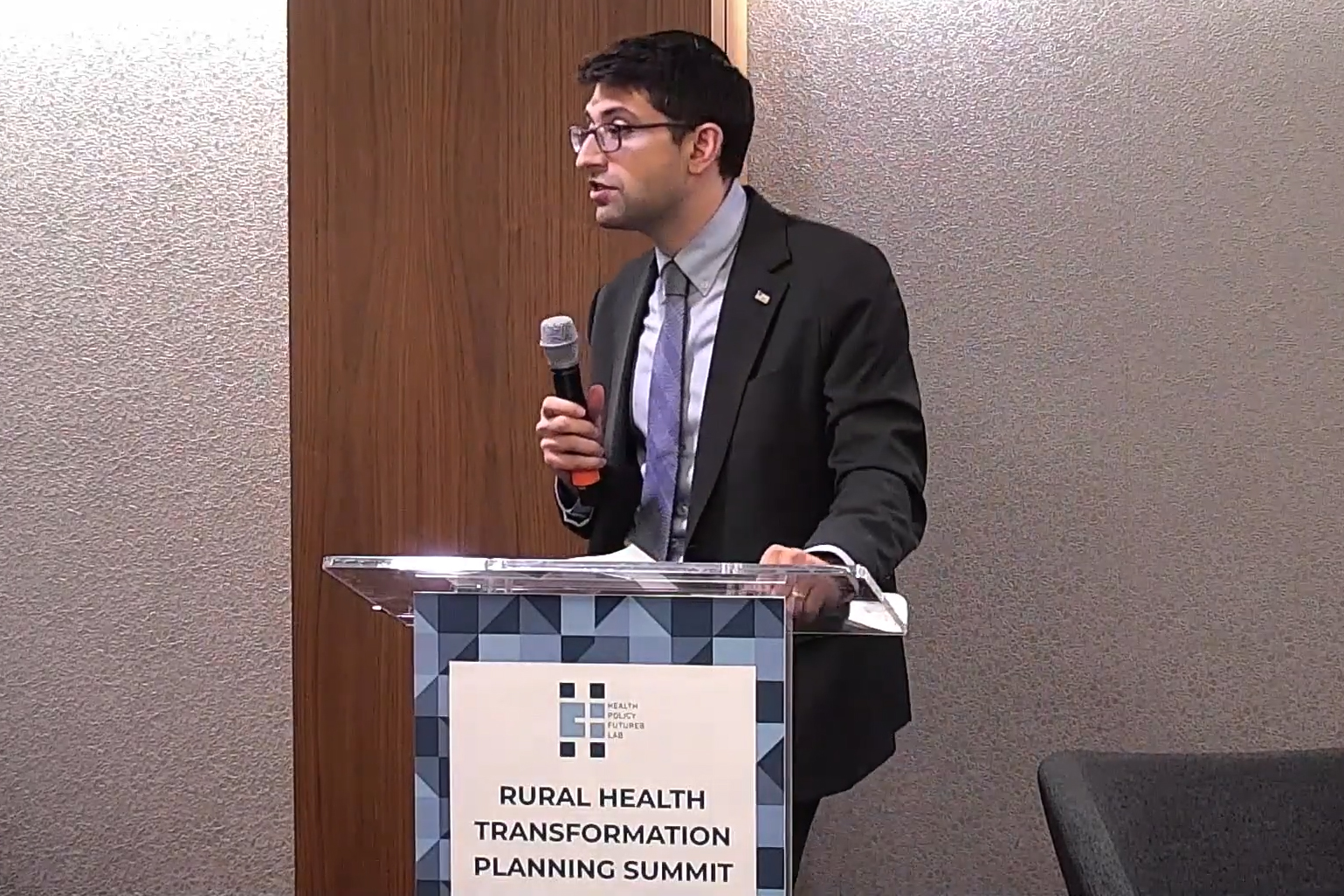
Quite, states ought to submit functions that “rebuild and reshape” how well being care is delivered in rural communities, Facilities for Medicare & Medicaid Companies official Abe Sutton stated late final month throughout a daylong assembly at Washington, D.C.’s Watergate Resort. Merely altering the best way authorities pays hospitals has been tried and has failed, Sutton informed the viewers of greater than 40 governors’ workplace staffers and state well being company leaders — some from as distant as Hawaii.
“This isn’t a backfill of working budgets,” stated Sutton, CMS’ innovation director. “We’ve been actually clear on that.”
Rural hospitals and clinics nationwide face a looming monetary disaster, with President Donald Trump’s huge tax-and-spending regulation anticipated to slash federal Medicaid spending on well being care in rural areas by $137 billion over 10 years. Congressional Republicans added the one-time, five-year Rural Well being Transformation Program as a last-minute sweetener to win the help of conservative holdouts who anxious concerning the invoice’s monetary fallout for rural hospitals.
But, the phrases utilized by CMS Administrator Mehmet Oz and his company’s leaders to explain the brand new pot of money are producing rigidity between legacy hospital and clinic suppliers and new technology-focused firms stepping in to supply new methods to ship well being care.
It’s “what I’d name incumbents versus insurgents within the rural area,” stated Kody Kinsley, a senior coverage adviser on the Institute for Coverage Options on the Johns Hopkins Faculty of Nursing.
Functions are due Nov. 5. The cash will probably be awarded to states by the top of the yr and distributed over 5 years.
Half of the $50 billion will probably be divided equally amongst all states with an authorised software; the opposite half will go to states that win factors. Of the second half, $12.5 billion will probably be allotted primarily based on a components that calculates every state’s rurality. The remaining $12.5 billion will go to states that rating effectively on initiatives and insurance policies that mirror the Trump administration’s “Make America Wholesome Once more” aims.
The software identifies particular coverage objectives comparable to implementing the Presidential Health Take a look at and restrictions to meals help, in addition to broader funding methods round distant care providers, knowledge infrastructure, and consumer-facing know-how instruments, which CMS recognized as “symptom checkers and AI chatbots.”
In September, after CMS officers launched the applying, Republican members of Congress from states with Democratic governors referred to as for equity, involved their states may direct the cash to city areas. In a letter to Oz and Well being and Human Companies Secretary Robert F. Kennedy Jr., they stated the cash “will function a lifeline for rural and at-risk hospitals in our communities which can be already struggling to maintain their doorways open.”
Smaller hospitals concern they’ll get “a tiny little slice” of every state’s share, stated Emily Felder, who leads the well being care apply at Brownstein Hyatt Farber Schreck, a regulation agency whose purchasers embrace rural hospital methods.
“There’s loads of frustration,” Felder stated.
However Kinsley, who was beforehand North Carolina’s secretary of well being and human providers, stated utilizing this cash solely to shore up a steadiness sheet “is actually simply throwing good cash after dangerous.” In distinction, he stated, insurgents comparable to technology-driven startups can provide new methods.
A kind of firms vying for funding is Homeward Well being, a Silicon Valley-based firm that contracts with Medicare managed care insurers. Utilizing synthetic intelligence analytics, Homeward helps sufferers get care of their residence and with native suppliers.
The corporate manages the well being of 100,000 rural Michigan sufferers enrolled in insurance coverage, stated Homeward co-founder and chief government Jennifer Schneider. The corporate was a sponsor for the Watergate summit. It additionally has ongoing conferences with Oz and his staff, Schneider stated.
“They’re doing their job, they usually’re speaking to lots of people within the ecosystem and actually desperate to be taught from these of us which were within the system,” Schneider stated. “We’re certainly one of many in that place.”
KFF Well being Information requested an interview with Alina Czekai, director of the newly created Workplace of Rural Well being Transformation. CMS spokesperson Alexx Pons stated the company was “unable to accommodate facilitation of any interview.”
As an alternative, CMS offered an emailed assertion from Oz saying this system “will assist states and communities reimagine what’s attainable for rural healthcare.”
Brock Slabach, chief operations officer of the Nationwide Rural Well being Affiliation, the biggest group representing rural hospitals and clinics, stated the cash would finest be used to assist pay for transformation that isn’t “attractive” or “revolutionary.”
“If what we find yourself with is now we have a wearable for each rural affected person, I don’t suppose that’s transformational,” Slabach stated, referring to digital well being screens comparable to fitness-tracking watches.
Slabach, a onetime small-hospital chief government and an unofficial adviser to a whole bunch of rural amenities nationwide, named a number of concepts for the cash — together with paying for capital enhancements comparable to digital well being data or gear, mortgage reimbursement applications to assist workforce improvement, and creating “SWAT” groups that rescue rural hospitals getting ready to closure.
Greater than 150 rural hospitals have closed nationwide since 2010 — a statistic cited by CMS’ Sutton that’s well-known amongst business watchers. The Sheps Middle on the College of North Carolina, which compiles the closure knowledge, additionally launched a information to assist states calculate how rural they’re for his or her functions.
State functions will probably be reviewed by a panel, with some reviewers from inside the authorities however others outdoors it, stated Kate Sapra, performing deputy director of the Workplace of Rural Well being Transformation, talking on the Watergate.
“We’ll practice them within the scoring standards,” Sapra stated, including that the panelists is not going to be coming from “your state” and might want to fill out conflict-of-interest types. A portion of cash every state will get will probably be reevaluated yearly primarily based on the progress it makes on its objectives and priorities, in keeping with CMS.
States are creating stakeholder teams, asking for public remark, and dealing with their well being companies. Some, comparable to Mississippi and New Mexico, are hiring consultants.
In Montana, a group of well being suppliers and associations proposed an inventory of concepts for the money, together with making a mortgage reimbursement fund for rural clinicians to attempt to ease employee shortages.
“It’s one-time cash, and it’s slightly bit of cash,” stated David Mark, a health care provider who’s the CEO of One Well being, which has clinics dotted throughout japanese Montana and Wyoming. A state might obtain a minimal of $100 million a yr for 5 years if all 50 states have functions authorised.
“How do you accomplish objectives of a well being care system transformation with an infusion of cash like that?” Mark stated.
Neither Montana nor Wyoming — huge, rural states — despatched leaders to the Watergate summit, in keeping with a duplicate of the attendees listing. Within the afternoon, attendees might rotate amongst planning tables and meet with company sponsors such because the digital well being data behemoth Epic and the emergency providers firm International Medical Response.
Wyoming Division of Well being Deputy Director Franz Fuchs confirmed his state didn’t ship representatives to the occasion, as a result of they have been “stretched with different commitments.” Montana, Wyoming, and different states submitted an non-obligatory letter of intent signaling they’ll apply for the funds. CMS didn’t reply to questions on what number of and which states have submitted letters.
In the course of the Watergate occasion, hints of brewing competitors amongst states started to floor.
“I believe Arkansas’ software goes to be higher than yours,” seasoned political adviser Jack Sisson stated with a smile throughout a morning panel.
The viewers laughed. Sisson, who just lately left his job as well being adviser for Arkansas Gov. Sarah Sanders, had interrupted Michael Hendrix, coverage adviser to a different Republican governor, Tennessee’s Invoice Lee.
“See, that is the form of pleasant competitors that CMS is hoping for,” Hendrix stated. He grinned, thanked Sisson, and added, “I sit up for us each profitable.”
KFF Well being Information Montana correspondent Katheryn Houghton contributed to this report.

