


In 2023, soiled mine water gushed out of the bottom behind James Christian’s house, flooding his yard in Wyoming County, West Virginia.
Sinkholes shaped, a powerful sulfur-like odor lingered within the air and oily sheens started coating the creek. Residents have blamed the mine for contaminating their creek and making a few of their neighbors sick.
Since then, a lawsuit by state regulators sparked a court docket battle between three coal corporations over the incident. Now, the state is accountable for cleansing up the mine and the injury it induced by way of a program that has traditionally been underfunded. In the meantime, state regulators have additionally authorized a brand new mine growth over the objections of native residents.
Indian Creek continues to run black and inexperienced, and generally the water has white streaks or slimy movie. A variety of water wells have gone unhealthy. And the nauseating odor of rotten eggs has unfold and is now palpable throughout the neighborhood.
“To get to my home, simply comply with the odor,” Christian mentioned.
West Virginians might pay as clear up falls to the state
In June, the company revoked the mining allow related to the previous underground Pinnacle mine, and the allow is now beneath the duty of the Division of Environmental Safety’s Workplace of Particular Reclamation, in accordance with company spokesperson Terry Fletcher.
The division is “at the moment formalizing a plan to finish reclamation of those websites that may embody sealing the open mine shafts and administration of the mine pool,” Fletcher mentioned. The Workplace of Particular Reclamation is accountable for cleansing up the land and water impacted by mining actions left behind by bankrupt coal corporations.
Beneath federal legislation, coal corporations are required to put up bonds so as to obtain mining permits as a form of insurance coverage. If an organization goes bankrupt, state regulators can use its bond cash to scrub up the mining websites, along with particular funds devoted to deserted mine cleanups. Nevertheless, neither funding supply has stored up with the associated fee to totally cowl reclamations.
By forfeiting the corporate’s bond, the DEP collected practically $1.5 million, which will probably be used to deal with the land and water points attributable to the Pinnacle Mining Advanced. The state company additionally secured a further $1.9 million from the bankrupt coal firm to place towards the clear up of the mine.
The DEP anticipates that the $3.4 million will cowl a lot of the land clear up and water remedy. Any extra funding that’s wanted will probably be from state funds devoted to scrub up deserted coal mines.
Along with sealing the open mine shafts, the DEP’s preliminary plan contains lowering the water ranges within the mine earlier than it discharges into Indian Creek, which the company will proceed to allow and monitor. This, the company mentioned, will tackle the water flowing out from underground in addition to the bacterial and odor points impacting the neighborhood.
Christian’s spouse, Tina, isn’t satisfied the company will have the ability to do away with the odor.
“In the event that they do, it’ll be a miracle,” she mentioned.
Residents say mine contaminated their creek, regulators say in any other case
The neighborhood has attributed a litany of issues to the creek, which they say is contaminated by the mine water. Rashes now spot Tereasa West’s chest and legs, Tina Christian nonetheless struggles to breathe, and her husband is now having points along with his thyroid.
Wells have additionally gone unhealthy, pumping out undrinkable water and leaving households depending on bottled water.
DEP has maintained that the water samples taken have proven that the discharge from the mine meets state and federal requirements.
The company collaborated with each the state Division of Well being and the Wyoming County Well being Division and supplied free nicely testing to households locally. Twenty-five residents participated, and the outcomes didn’t present proof of mine-related contamination, mentioned Fletcher.
However residents have continued to complain, and voice mistrust of the state.
The DEP has requested help from the U.S. Workplace of Floor Mining, Reclamation, and Enforcement to analyze the neighborhood’s allegations of contaminated nicely water. A report on its discovering will probably be launched quickly.
However — whatever the company’s outcomes — the neighborhood continues to say that there’s one thing unsuitable with their creek. Whereas the water high quality within the space has by no means been nice, residents say it’s been noticeably worse since mine water erupted from underground.
As a baby, West grew up taking part in within the creek, however now, a long time later, that’s not an possibility for her grandchildren.
“I’ve lived on Indian Creek the vast majority of my life, and I’ve by no means in all these years ever seen Indian Creek waters within the situation that they’re in now,” West mentioned.
And as residents in and round Indian Creek proceed to wrestle with the odor and the discolored water, they fear issues are going to worsen.
Final month, the DEP authorized a request by Brooks Run South Mining, LLC, to broaden its underground Marianna Slope Mine within the Indian Creek space.
Beneath the revised allow, the mine might discharge into a number of different waterways inside Indian Creek. Group members criticize the choice as they proceed to battle with unusable water sources.
Fletcher mentioned that the mine should adjust to its allow limits, and the DEP will implement these limits if there are violations.
However these assurances haven’t eased the neighborhood’s worries or the insecurity within the state company.
“We advised them we didn’t need it to occur, they usually did it anyway,” mentioned Tina Christian.
___
This story was initially printed by Mountain State Highlight and distributed by way of a partnership with The Related Press. Written by Sarah Elbeshbishi.
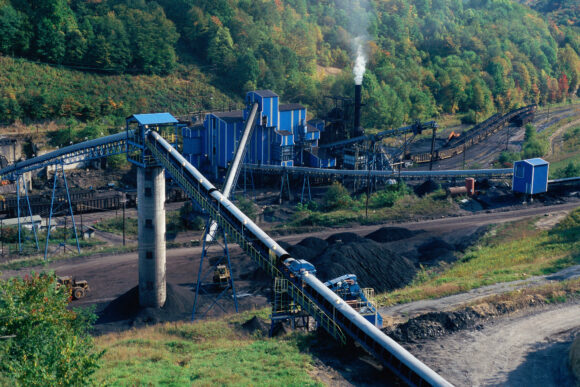
Picture: A West Virginia coal mine (Adobe Inventory)
Copyright 2025 Related Press. All rights reserved. This materials might not be printed, broadcast, rewritten or redistributed.
Matters
Virginia

