


By Lewis Nibbelin, Contributing Author, Triple-I
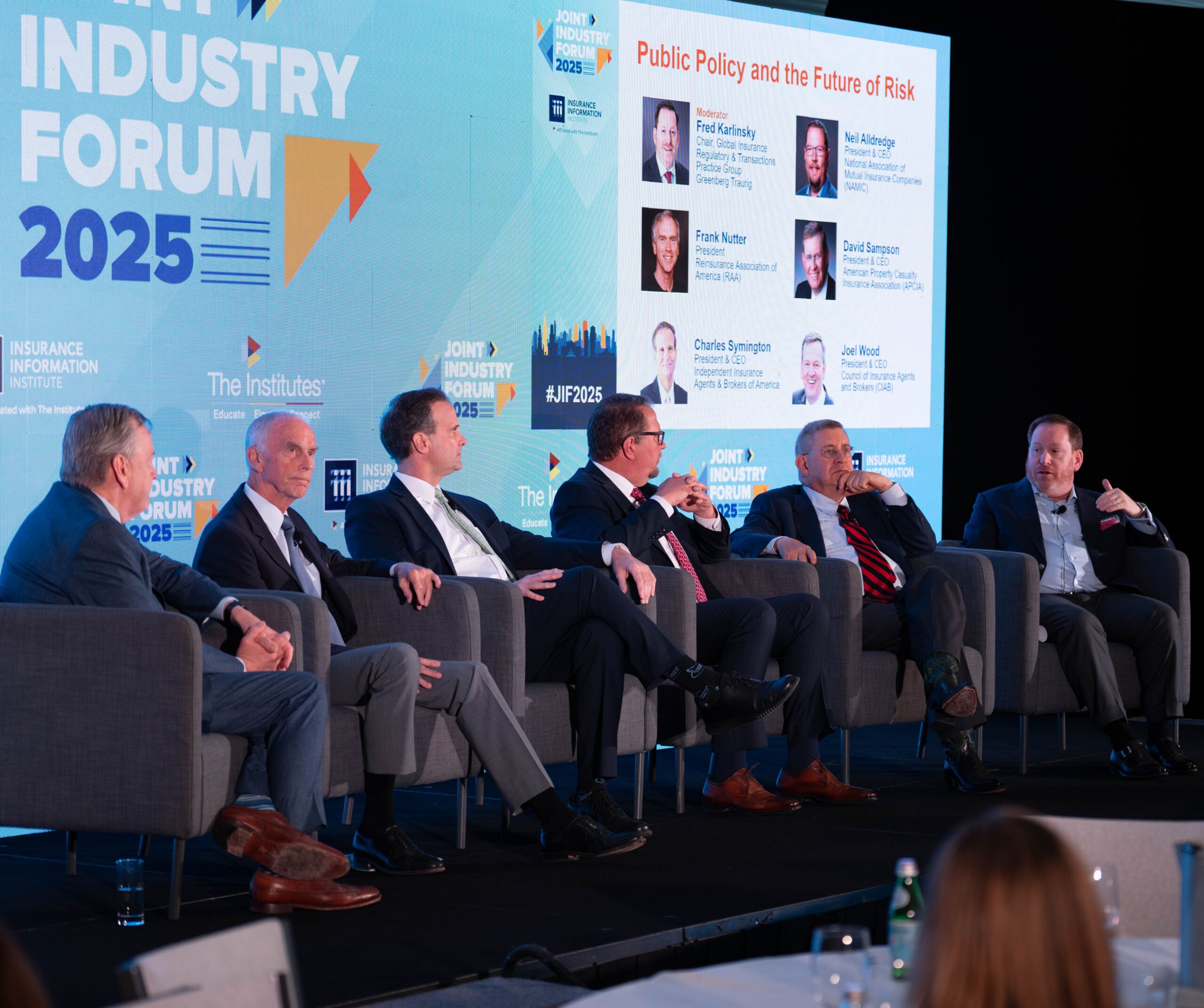
Current efforts to curb federal spending – notably large proposed cuts to a number of main federal science businesses and quite a few FEMA grant packages – drew concern from panelists at Triple-I’s Joint Trade Discussion board in Chicago.
Slated to lose round half of their unique budgets, organizations just like the Nationwide Oceanic and Atmospheric Administration (NOAA) and the Nationwide Science Basis (NSF) present insurers with a lot of the analysis knowledge wanted to mannequin local weather dangers, for gratis to insurers nor the broader public. Abolishing this analysis, which additionally permits day by day climate and pure catastrophe forecasting, will improve underwriting prices and people related to numerous different industries, together with transportation, agriculture, and power.
“Federal science businesses in all probability facilitate extra financial exercise within the nation than another federal company,” stated Frank Nutter, president of the Reinsurance Affiliation of America (RAA). “Absolutely funding and restaffing these businesses is fairly essential.”
A number of cancelled FEMA mitigation packages have left dozens of catastrophe-prone communities with out assist – together with tasks that have been authorized earlier than the cuts. Ending the Constructing Resilient Infrastructure and Communities (BRIC) program, as an example, rescinded roughly $882 million in local weather resilience funding — “cash we may have spent on mitigation, so we don’t need to spend a lot after a catastrophe,” stated Neil Alldredge, president and CEO of the Nationwide Affiliation of Mutual Insurance coverage Firms (NAMIC).
Nutter added that “weighing in opposition to security, instructor salaries – all of the sorts of issues that communities grapple with,” most former grantees lack the sources for “danger discount or municipal tasks and infrastructure” with out federal funding.
Inhabitants development in high-risk areas exacerbates the problem, Alldredge stated.
“For those who have a look at a map of this nation and the inhabitants adjustments from 1980 to right now, now we have moved all the inhabitants to all of the fallacious locations,” he defined. Constructing properties able to withstanding these climate patterns – not to mention insuring them – has launched the business into “a brand new period of danger.”
Whereas the panelists agreed that alternatives to enhance FEMA operations exist, they questioned President Trump’s consideration to disband it completely by shifting to a state-based reduction system.
David Sampson, president and CEO of the American Property Casualty Insurance coverage Affiliation (APCIA), famous that “the very nature of a pure catastrophe signifies that it overwhelms the native entity’s potential to reply,” rendering any state-based answer “unworkable.”
“I feel we as an business know the place the low-hanging fruit for reforms are,” Sampson continued, as a result of “we work together with FEMA on the bottom after disasters.”
State-level legislative momentum
Although the Trump administration’s present plans don’t bode properly for the way forward for catastrophe resilience, insurers celebrated many state legislative wins this yr concerning tort reform, notably in Georgia and Louisiana.
“Even on the federal degree, there’s a rising sense of consciousness of the unfavorable influence that an out-of-control tort system is taking up the economic system and the American shopper,” Sampson stated, highlighting a brand new invoice that may impose taxes on third-party litigation funding.
Florida additionally efficiently resisted challenges to its 2023 and 2024 reforms, which have already helped stabilize the state’s insurance coverage charges and attracted new insurers after a multi-year exodus. Charles Symington, president and CEO of the Unbiased Insurance coverage Brokers & Brokers of America, identified that business advocacy is essential to tort reform survival.
“When you get these helpful items of laws handed,” he stated, “now we have to struggle the struggle in each legislative session.”
Symington then contrasted Florida’s recovering market with California’s enduringly hostile regulatory atmosphere, propelled by the 1988 measure Proposition 103.
Insurance coverage Commissioner Ricardo Lara has carried out a Sustainable Insurance coverage Technique to mitigate the results of Prop 103 – similar to by authorizing insurers to make use of disaster modeling if they comply with provide protection in wildfire-prone areas – however the technique has garnered criticism from legislators and shopper teams.
“California doesn’t have the evaluation potential like Florida does,” agreed moderator Fred Karlinsky, shareholder and international chair of Greenberg Traurig, LLP. “California is three many years behind.”
As insurers modify their danger urge for food to replicate these constraints, extra property homeowners have been pushed into California’s FAIR Plan – the state’s property insurer of final resort.
“Our members are having to cobble collectively protection,” stated Joel Wooden, president and CEO of the Council of Insurance coverage Brokers & Brokers (CIAB), who famous that the FAIR plan’s policyholder rely has greater than doubled since 2020.
Pure disasters like January’s devastating wildfires underscore California’s want for premium charges that adequately replicate the total influence of those dangers, which is crucial to the continued availability of personal insurance coverage within the state.
“When you might have the proper management in place – the governor, the state legislature – and you’ve got the business being efficient in our advocacy, then we will enhance these tough marketplaces,” Symington concluded.
Study Extra:
JIF 2025: U.S. Coverage Modifications and Uncertainty Imperil Insurance coverage Affordability
JIF 2025: Litigation Tendencies, Synthetic Intelligence Take Middle Stage
Insurance coverage Affordability, Availability Demand Collaboration, Innovation
Tariff Uncertainty Could Pressure Insurance coverage Markets, Problem Affordability
Reining in Third-Social gathering Litigation Funding Good points Traction Nationwide

