


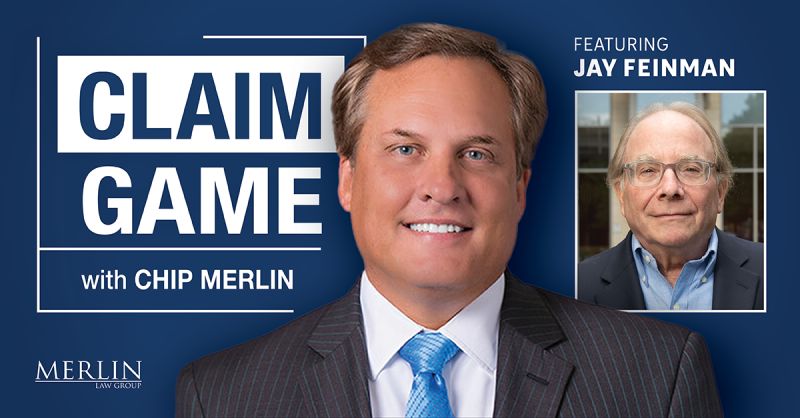
Throughout my current Declare Sport interview with Distinguished Professor of Legislation Jay Feinman, I used to be struck by a second of critique, which I solely totally appreciated after re-watching the interview. We have been discussing the failures of insurance coverage regulation, particularly with reference to unfair claims practices. Feinman made a pointed statement.
He warned that it’s not simply corruption we ought to be frightened about. As a substitute, it’s affect. Not affect within the sense of overt lobbying or backroom offers however in the best way regulators come to see the world via the eyes of the very business they’re meant to police.
Feinman referred to as it out plainly. Regulators, he mentioned, are formed by the folks they communicate to most frequently. These individuals are not policyholders or client advocates. They’re insurance coverage firm executives, compliance officers, actuaries, and commerce affiliation lobbyists. This shut, day-to-day interplay inevitably narrows a regulator’s perspective. Over time, it shifts their body of reference. “It’s not nearly bribery,” Feinman informed me. “It’s about who gives them with knowledge, stories, and each day contact. It’s the insurance coverage corporations that form their worldview.”
The sort of affect has a reputation within the tutorial world. It’s referred to as cultural or cognitive seize. It differs from extra acquainted types of regulatory seize, like monetary conflicts or revolving-door employment preparations, though it usually accompanies them.
“Cultural seize” happens when regulators internalize the norms, assumptions, and priorities of the business. It’s delicate, insidious, and extremely onerous to uproot. It may be the explanation why regulators overlook systemic abuses in claims dealing with, why market conduct research concentrate on trivial technicalities as an alternative of significant patterns of hurt, and why proposed reforms stall beneath the guise of complexity or feasibility.
The Nationwide Affiliation of Insurance coverage Commissioners (NAIC) is a very illustrative instance. Whereas many consider it to be a governmental company, it’s, in actual fact, a non-public 501(c)(3) nonprofit funded and ruled by state insurance coverage commissioners. These commissioners usually have prior careers within the insurance coverage business, and plenty of return to it after their public service ends. NAIC employees are continuously drawn from the identical pool of business consultants they purport to supervise.
This revolving door doesn’t simply blur the traces between regulator and controlled. As a substitute, it erases them. I beforehand mentioned this revolving door in a lot higher element in The Revolving Door Connecting Insurance coverage Regulators with the Supposedly Regulated Insurance coverage Trade.
Educational critiques have lengthy flagged the NAIC as a structurally susceptible establishment. Thomas Leonardi, former Connecticut Insurance coverage Commissioner, brazenly criticized the NAIC’s governance, saying inside management “hijacked” impartial oversight processes to keep away from transparency. Others have noticed that the NAIC’s mannequin regulation course of usually displays business priorities, with minimal public enter and just about no binding client safety mandates. Nonetheless, the NAIC’s suggestions and fashions carry important weight in almost each state’s insurance coverage regulatory framework. It’s a paradox {that a} personal group guided by individuals who could also be extra aware of insurer spreadsheets than policyholder ache units public coverage and advised legal guidelines.
Feinman’s concern is just not tutorial nitpicking. It’s a warning drawn from many years of analysis, case evaluation, and publicity to real-world penalties. When regulators undertake the vocabulary and logic of insurers, they start to excuse unreasonable conduct as acceptable deviation. They justify delayed or denied claims as a part of the actuarial course of. They fail to ask why a system persistently fails the folks it was meant to guard. They continue to be blind to patterns that, in another setting, could be grounds for sanction with requires reform.
Feinman reminded viewers that insurance coverage isn’t just a product. As a substitute, it’s a social promise. He acknowledged that he totally helps the idea and wish for insurance coverage as a result of it’s the mechanism by which society allocates threat, loss, and restoration. But, when that mechanism is overseen by officers who’ve been unconsciously co-opted into the business’s worldview, the promise breaks. Policyholders endure as a result of these charged with the enforcement of legal guidelines and selling client protections now not totally see the violations as flawed.
To repair this, I recommend we should first identify it. “Cultural seize” is just not as seen as a bribe or a scandal, however its penalties are simply as actual. It lives within the questions regulators fail to ask, within the mannequin legal guidelines that by no means get written, and within the research that miss the forest for the bushes. Jay Feinman supplied a quiet however agency problem in our dialog. We have to demand extra, not simply from insurance coverage corporations, however from the system that oversees them.
We should name for transparency on the NAIC. We should demand that insurance coverage commissioners have interaction rather more continuously with client teams, not simply company boards and insurance coverage executives at insurance coverage conferences. We should advocate for structural separation between regulators and people they regulate. We should demand higher outreach by insurance coverage regulators to the general public with out regulators being apologists or spokespersons for the business. There should be rigorous public accountability and transparency in regards to the interactions between insurance coverage regulators and people they regulate.
We should additionally inform the reality. The insurance coverage regulatory system is not going to serve the general public till it stops being formed by the insurance coverage business’s picture of what it ought to be.
I’ll have extra on this intriguing dialogue with Jay Feinman in tomorrow’s publish. Here’s a hyperlink to the Declare Sport interview.
Thought For The Day
“If you wish to put Chip Merlin out of enterprise, simply pay all legitimate claims. That’ll do it.”
—Jay Feinman, throughout Declare Sport interview >

