


The Trump administration should quickly decide that may have an effect on tens of millions of Individuals’ capability to entry and afford psychological well being and habit care.
The administration is going through a Might 12 deadline to declare if it can defend Biden-era rules that purpose to implement psychological well being parity — the concept insurers should cowl psychological sickness and habit therapy comparably to bodily remedies for illnesses comparable to most cancers or hypertension.
Though a federal parity legislation has been on the books since 2008, the rules in query have been issued final September. They signify the newest growth in an almost two-decade push by advocates, regulators, and lawmakers to make sure insurance coverage cowl psychological well being care equitably to bodily well being care.
Inside the dense 166-page remaining rule, two provisions have garnered explicit consideration: first, that insurers present “significant advantages” — as outlined by impartial medical requirements — for coated psychological well being situations in the event that they accomplish that for bodily situations. For instance, if insurers cowl screening and insulin therapy for diabetes, then they’ll’t cowl screening alone for opioid habit; they have to additionally cowl drugs to deal with opioid use dysfunction.
Second, insurers should transcend the written phrases of their insurance policies to measure how they work in apply. For instance, are sufferers having to hunt out-of-network care extra usually for psychological than bodily care? In that case, and it pertains to an insurer’s insurance policies, then these insurance policies have to be adjusted.
In January, a commerce affiliation representing about 100 giant employers sued the federal authorities, claiming the rules overstepped the administration’s authority, would improve prices, and risked decreasing the standard of care. The ERISA Trade Committee represents a number of Fortune 500 corporations, comparable to PepsiCo and Comcast, which sponsor medical health insurance plans for his or her workers and can be immediately affected by the brand new rules.
ERIC’s lawsuit, filed days earlier than President Donald Trump’s inauguration, places the onus on the brand new administration to resolve whether or not to defend the rules. If it chooses to not, the principles might be scrapped.
Psychological well being clinicians, sufferers, and advocates are urging the administration to combat again.
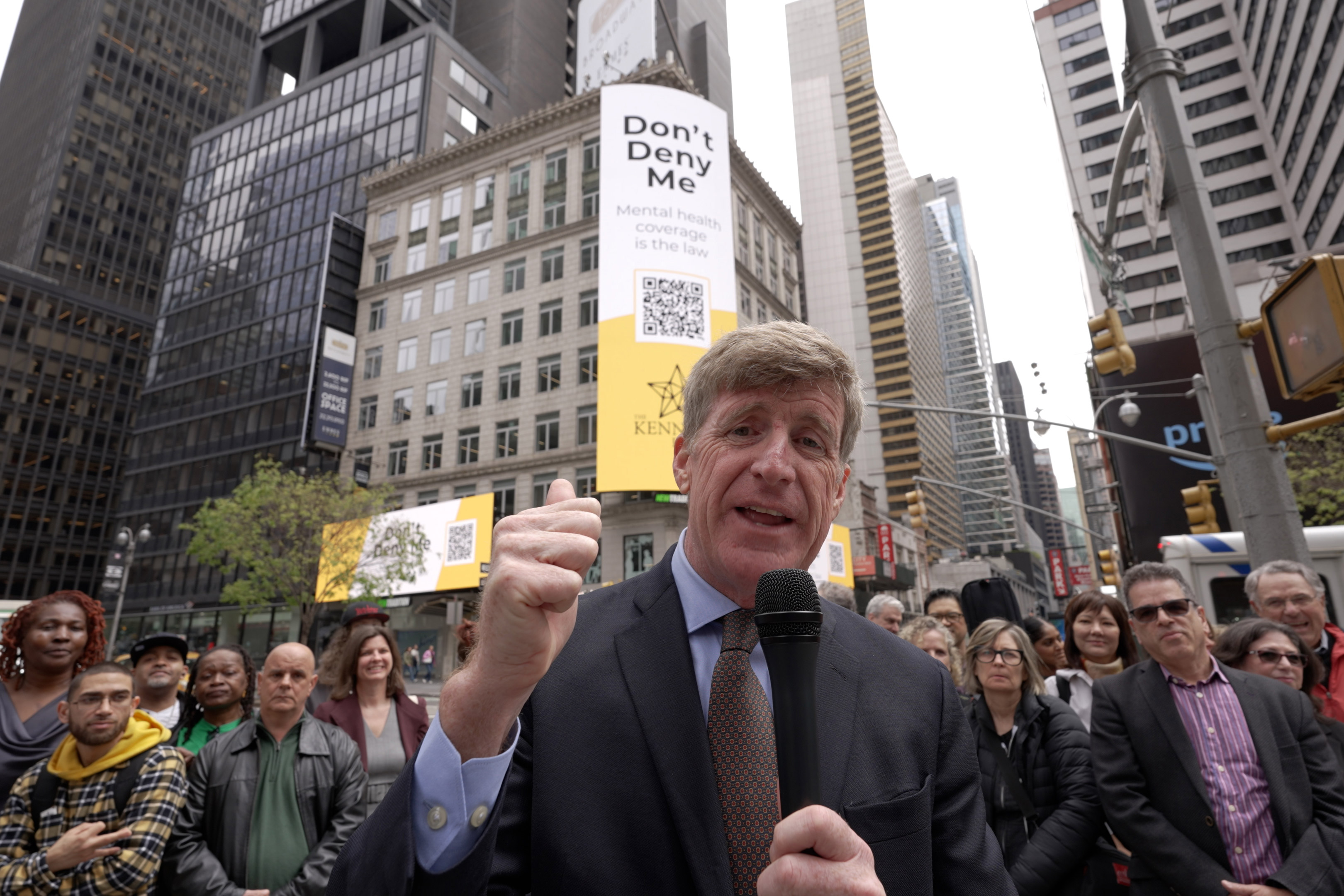
“What we’re making an attempt to do is make the spirit of parity a sensible actuality,” stated Patrick Kennedy, a Democratic former U.S. consultant who sponsored the 2008 parity legislation within the Home and co-founded the Kennedy Discussion board, which advocates on psychological well being points. That is “an existential situation for the nation, public well being, for each facet of our society.”
A 2023 nationwide survey discovered that greater than 6 million adults with psychological sickness who wished therapy previously yr have been unable to obtain it. Price was one of the vital widespread boundaries.
This lack of therapy harms folks’s bodily well being too, with analysis suggesting that undertreating melancholy can complicate power situations, comparable to diabetes.
Kennedy hopes that connection will immediate help from the Trump administration, which has made power illness a central focus of its “Make America Wholesome Once more” agenda.
“You’re by no means going to get MAHA in case you don’t combine psychological well being,” Kennedy stated, mentioning the broad well being motion embraced by his cousin HHS Secretary Robert F. Kennedy Jr.
However James Gelfand, president and CEO of ERIC, stated the rules are a misguided try to unravel the nation’s psychological well being care disaster.
Individuals’s problem accessing remedy or remedy has much less to do with insurance coverage coverage and extra to do with a extreme scarcity of psychological well being care suppliers, he stated, including, “No quantity of penalties on employers” or new parity rules “goes to alter that dynamic till we get extra of those suppliers.”
This level is on the coronary heart of debate about parity points. Is psychological well being care troublesome to entry as a result of there are few suppliers, or are suppliers not accepting insurance coverage due to low reimbursement charges? A latest research by the analysis institute RTI Worldwide suggests it has extra to do with cost.
The departments of Justice, Labor, and Well being and Human Companies declined to remark for this text. The Treasury Division, which can also be concerned within the lawsuit, didn’t reply to requests for remark.
‘They Financial institution on You Simply Giving Up’
Psychiatric nurse practitioner Gabrielle Abelard employs about 40 clinicians in her remedy apply, which serves about 2,500 purchasers throughout Massachusetts annually.
One of many applications she’s most proud to supply is intensive in-home remedy for youngsters with critical behavioral challenges, comparable to intergenerational trauma, aggressive outbursts, and self-harm. Two clinicians go to the kid’s house over months and work with the household, the kid’s medical doctors, and faculty employees.
“A giant a part of the work being achieved helps to maintain youngsters at school, serving to to maintain them out of the hospital and even out of jail,” Abelard stated.
However insurance coverage boundaries generally hinder the providers.
Abelard’s employees has to acquire prior authorization from insurers earlier than they’ll present care. Then they must reapply for authorization each two, three, or six months, relying on the insurer. When that reauthorization is delayed, Abelard faces a dilemma: proceed seeing purchasers realizing insurers might not pay for these providers or go away purchasers with out care till the reauthorization comes by way of.
Persevering with providers has value her tens of hundreds of {dollars}, she stated, and months of bureaucratic hurdles to acquire again funds from insurers.
“They financial institution on you simply giving up,” she stated.
A aim of the landmark 2008 Psychological Well being Parity and Dependancy Fairness Act was to lower dilemmas comparable to Abelard’s.
However the bipartisan legislation primarily emphasised easy-to-measure therapy limits, saying insurers couldn’t impose greater deductibles or copays for psychological well being care than they did for bodily well being care. What obtained much less consideration was how insurers ought to deal with different limitations, comparable to prior authorization or fail-first necessities for sufferers to strive sure therapies earlier than they might be eligible for others.
Because of this, true parity remained elusive, stated Deborah Steinberg, a senior well being coverage lawyer on the nonprofit Authorized Motion Middle.
In 2020, Congress tried to handle this by way of a brand new legislation, signed by Trump in his first time period. The legislation required insurance coverage to systematically analyze variations in sure therapy limitations for psychological and bodily well being care and submit these analyses upon request to states and the federal governments.
Because the federal authorities reviewed a few of these analyses, it found quite a few parity violations. In a 2022 report, it detailed how some insurance coverage coated dietary counseling for diabetes, however not for anorexia or bulimia. One other plan required precertification for all outpatient psychological well being and habit providers however just for a choose few outpatient medical and surgical providers.
The rules issued in September aimed to offer insurers extra steerage on the 2020 legislation and shut loopholes that allowed such disparities, Steinberg stated.

‘Provide Is the Largest Downside’
One of many greatest adjustments within the new rules was the deal with outcomes, comparable to how usually sufferers exit of community for psychological versus bodily care.
Steinberg referred to as the availability “a very necessary change.” However Gelfand, president of the employer affiliation suing to cease the rules, stated it ignores the complexity of psychological well being care.
Many components exterior employers’ and insurers’ management have an effect on how usually a affected person goes out of community, he stated, together with the provision of suppliers within the space, regional variations in medical practices, and the affected person’s private choice.
Psychological well being clinicians know there’s excessive demand for his or her providers, in order that they have plenty of market energy. That “is creating the unhealthy conduct from these suppliers,” Gelfand stated, comparable to refusing to just accept insurance coverage and never submitting out-of-network payments on purchasers’ behalf.
“Provide is the largest downside,” Gelfand stated.
Nevertheless, the RTI Worldwide research challenged that premise, with the authors noting that major care physicians are in shorter provide than behavioral well being suppliers but have a lot decrease out-of-network use.
The authors level to insurance coverage reimbursements because the wrongdoer as an alternative. The research discovered that insurance coverage reimbursements for behavioral well being visits are, on common, 22% decrease than for medical or surgical workplace visits. The low pay creates a disincentive for psychologists and psychiatrists to hitch insurance coverage networks.
However the repair might not be as straightforward as elevating reimbursement charges. Firms are already paying more and more excessive premiums for workers’ medical health insurance and lots of are involved about sustaining these advantages.
ERIC has championed different methods, comparable to reforming medical training and residency applications to provide extra psychological well being care suppliers, growing telehealth providers, and coaching major care medical doctors to handle fundamental psychological well being issues. The group usually lobbies state and federal lawmakers, writes letters to regulatory companies, and testifies earlier than Congress on these points.
Narrowly specializing in insurance coverage rules might have unintended penalties, Gelfand stated. Elevated prices for well being plans might get handed on to shoppers. Or, in an try to hold prices down, insurers might slender the scale of their bodily well being care networks to match the psychological well being ones. In a worst-case situation, employers might cease offering psychological well being advantages altogether.
Advocates say that’s unlikely, since many workers have come to count on such a protection, and employers acknowledge that offering psychological well being advantages can improve employee productiveness and retention.
Patrick Kennedy additionally pointed to the larger image round these points: If folks don’t have insurance coverage protection for psychological well being care, they’re extra more likely to find yourself in disaster on the hospital or within the felony justice system, he stated. Their youngsters could also be despatched to foster care. Taxpayers finance these programs.
“All of us find yourself choosing up the tab for not implementing parity,” he stated.
However what calculation the Trump administration makes — and whether or not it defends or drops the brand new rules — stays to be seen.

