


CRESTWOOD, Mo. — The prospect of sweeping federal cuts to Medicaid is alarming to some Missourians who keep in mind the final time the general public medical insurance coverage program for these with low incomes or disabilities was pressed for money within the state.
In 2005, Missouri adopted among the strictest eligibility requirements within the nation, decreased advantages, and elevated sufferers’ copayments for the joint federal-state program because of state funds shortfalls totaling about $2.4 billion over a number of prior years. Greater than 100,000 Missourians misplaced protection because of this, and the Federal Reserve Financial institution of Philadelphia reported that the modifications led to will increase in bank card borrowing and debt in third-party collections.
A lady advised NPR that yr that her $6.70-an-hour McDonald’s job put her over the brand new revenue limits and rendered her ineligible, although she was supporting three youngsters on about $300 every week. A lady receiving $865 a month in incapacity funds nervous at a city corridor assembly about not with the ability to increase her orphaned granddaughter because the state requested her to pay $167 a month to maintain her well being protection.
Now, Missouri might lose an estimated $2 billion a yr in federal funding as congressional Republicans look to chop not less than $880 billion over a decade from a pool of funding that features Medicaid packages nationwide. Medicaid and the carefully associated Youngsters’s Well being Insurance coverage Program collectively insure roughly 79 million individuals — about 1 in 5 People.
“We’re taking a look at a way more vital affect with the lack of federal funds even than what 2005 was,” mentioned Amy Blouin, president of the progressive Missouri Funds Venture suppose tank. “We’re not going to have the ability to shield youngsters. We’re not going to have the ability to shield individuals with disabilities from some type of affect.”
At at the moment’s spending ranges, a minimize of $880 billion to Medicaid might result in states’ dropping federal funding starting from $78 million a yr in Wyoming to $13 billion a yr in California, in keeping with an evaluation from KFF, a well being info nonprofit that features KFF Well being Information. State lawmakers nationwide would then be left to deal with the shortfalls, probably by means of some mixture of slashing advantages or eligibility, elevating taxes, or discovering a special massive funds merchandise to chop, reminiscent of training spending.
Republican lawmakers are floating varied proposals to chop Medicaid, together with one to cut back the cash the federal authorities sends to states to assist cowl adults who gained entry to this system underneath the Inexpensive Care Act’s provision generally known as Medicaid enlargement. The 2010 well being care legislation allowed states to develop Medicaid eligibility to cowl extra adults with low incomes. The federal authorities is selecting up 90% of the tab for that group. About 20 million individuals nationwide are actually lined by means of that enlargement.
Missouri expanded Medicaid in 2021. That has meant {that a} single working-age grownup in Missouri can now earn as much as $21,597 a yr and qualify for protection, whereas earlier than, nondisabled adults with out youngsters couldn’t get Medicaid protection. That portion of this system now covers over 329,000 Missourians, greater than 1 / 4 of the state’s Medicaid recipients.
For each share level that the federal portion of the funding for that group decreases, Missouri’s Medicaid director estimated, the state might lose $30 million to $35 million a yr.
However the equation is much more sophisticated provided that Missouri expanded entry by way of a constitutional modification. Voters authorised the enlargement in 2020 after the state’s Republican management resisted doing so for a decade. Which means modifications to Medicaid enlargement in Missouri would require voters to amend the state structure once more. The identical is true in South Dakota and Oklahoma.
So even when Congress tried to narrowly goal cuts to the nation’s Medicaid enlargement inhabitants, Washington College in St. Louis well being economist Timothy McBride mentioned, Missouri’s enlargement program would probably keep in place.
“Then you definitely would simply have to seek out the cash elsewhere, which might be brutal in Missouri,” McBride mentioned.
In Crestwood, a suburb of St. Louis, Sandra Smith worries her daughter’s in-home nursing care can be on the chopping block. Almost all in-home providers are an non-obligatory a part of Medicaid that states will not be required to incorporate of their packages. However the providers have been important for Sandra and her 24-year-old daughter, Sarah.
Sarah Smith has been disabled for many of her life because of seizures from a uncommon genetic dysfunction known as Dravet syndrome. She has been lined by Medicaid in varied methods since she was 3.
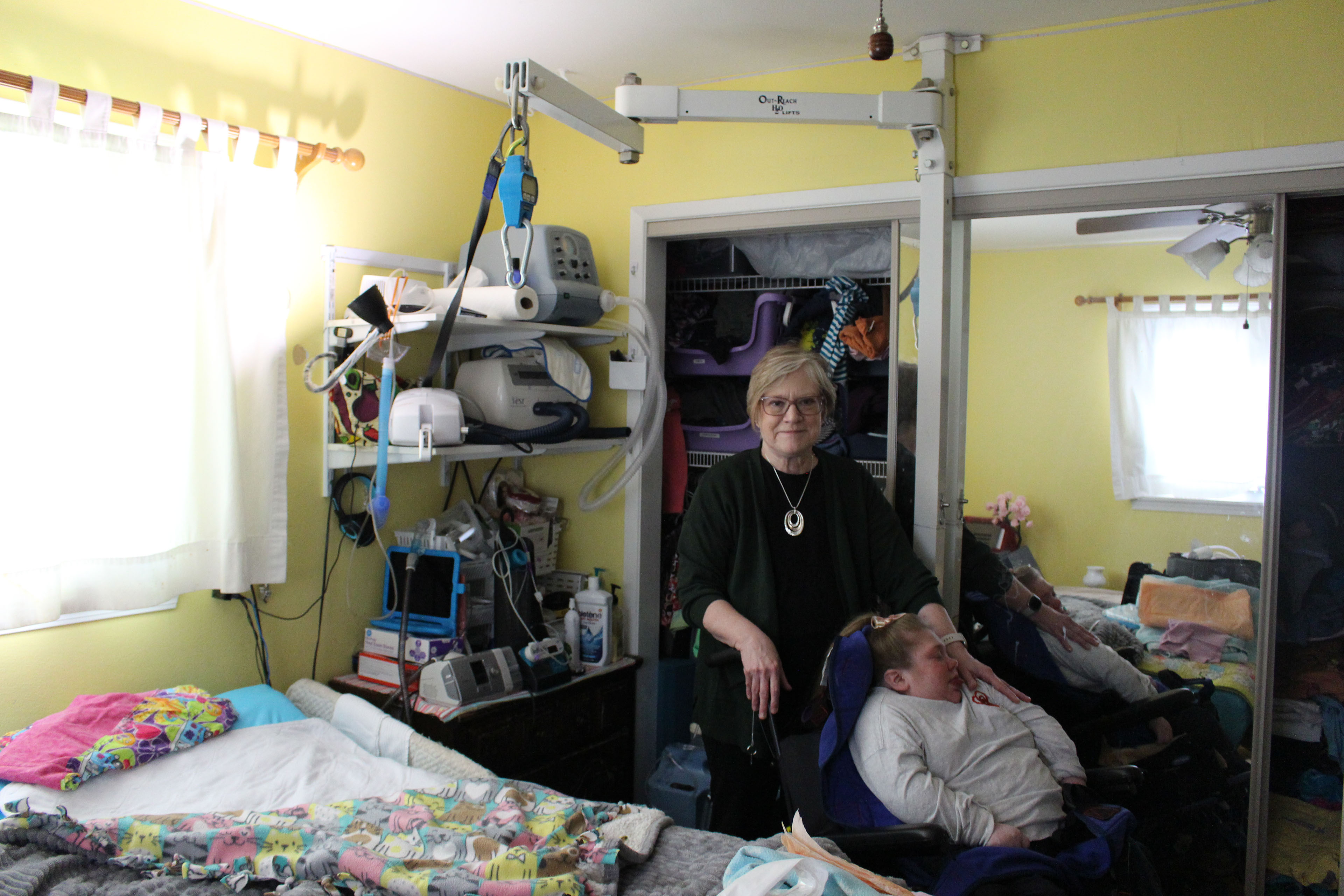
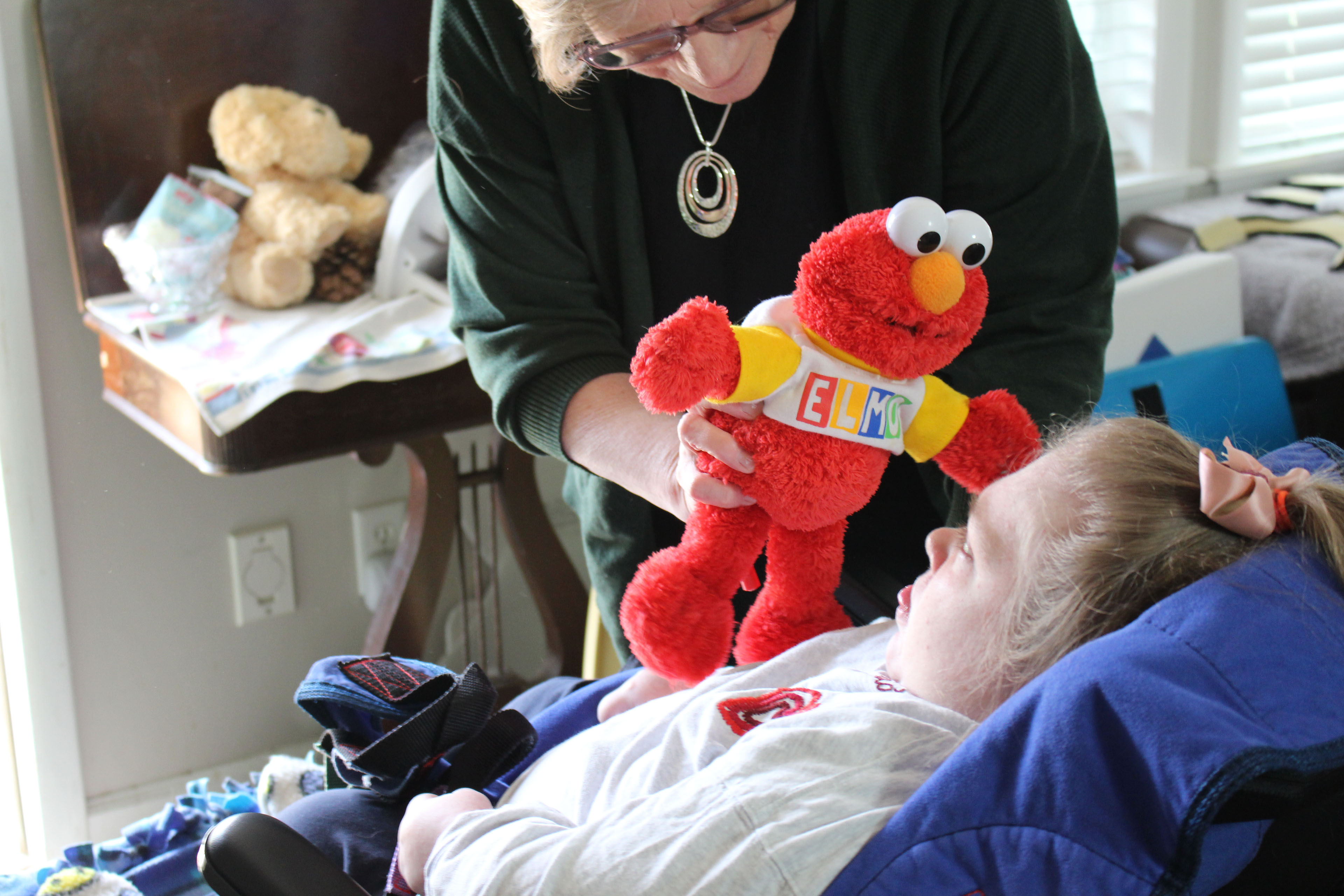
She wants intensive, 24-hour care, and Medicaid pays for a nurse to return to their residence 13 hours a day. Her mom serves because the in a single day caregiver and covers when the nurses are sick — work Sandra Smith just isn’t allowed to be compensated for and that doesn’t rely towards the 63-year-old’s Social Safety.
Having nursing assist permits Sandra Smith to work as an impartial podcast producer and offers her a break from being the go-to-person for offering care 24 hours a day, day after day, yr after yr.
“I actually and really don’t know what I might do if we misplaced the Medicaid residence care. I’ve no plan in any respect,” Sandra Smith mentioned. “It isn’t sustainable for anybody to do infinite, 24-hour care with out dire bodily well being, psychological well being, and monetary penalties, particularly as we mother and father get into our elder years.”
Elias Tsapelas, director of fiscal coverage on the conservative Present-Me Institute, mentioned potential modifications to Medicaid packages rely on the extent of any funds cuts that Congress finally passes and the way a lot time states have to reply.
A big minimize applied instantly, for instance, would require state legislators to search for elements of the funds they’ve the discretion to chop shortly. But when states have time to soak up funding modifications, he mentioned, they’d have extra flexibility.
“I’m not able to suppose that Congress goes to willingly put us on the trail of creating each state go minimize their advantages for essentially the most susceptible,” Tsapelas mentioned.
Missouri’s congressional delegation break up alongside social gathering strains over the latest funds decision calling for deep spending cuts, with the Republicans who management six of the eight Home seats and each Senate seats all voting for it.
However 76% of the general public, together with 55% of Republicans, say they oppose main federal funding cuts to Medicaid, in keeping with a nationwide KFF ballot carried out April 8-15.
And Missouri Sen. Josh Hawley, a Republican, has mentioned that he doesn’t help slicing Medicaid and posted on the social platform X that he was advised by President Donald Trump that the Home and Senate wouldn’t minimize Medicaid advantages and that Trump gained’t signal any profit cuts.
“I hope congressional management will get the message,” Hawley posted. He declined to remark for this text.
U.S. Home Republicans are aiming to move a funds by Memorial Day, after many state legislatures, together with Missouri’s, could have adjourned for the yr.
In the meantime, Missouri lawmakers are poised to move a tax minimize that’s estimated to cut back state income by about $240 million within the first yr.

