


I watched because the skies over my house in Los Angeles turned an apocalyptic orange on January 7, 2025, as wildfires raged throughout the state. Among the many most devastating, the Palisades Hearth consumed 1000’s of acres, leaving a wake of destruction that has pushed California to reckon with its wildfire administration methods.
The fires, fueled by relentless Santa Ana winds, have laid naked vulnerabilities in wildfire prevention, city planning, emergency preparedness, and the state’s capability to adapt to escalating local weather threats.
As a resident, and as a threat skilled, the devastation has been staggering to witness. The fireplace has destroyed over 12,000 constructions, together with iconic landmarks such because the Will Rogers State Historic Park and the Topanga Ranch Motel. Faculties and locations of worship, together with Palisades Elementary and St. Mark’s Episcopal Church, have been decreased to ash.
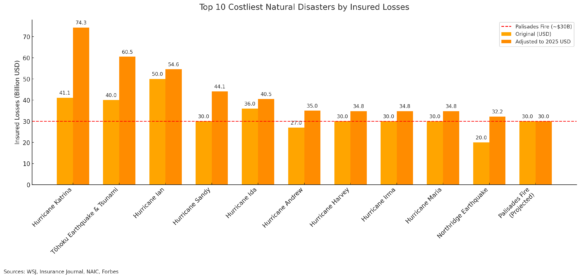
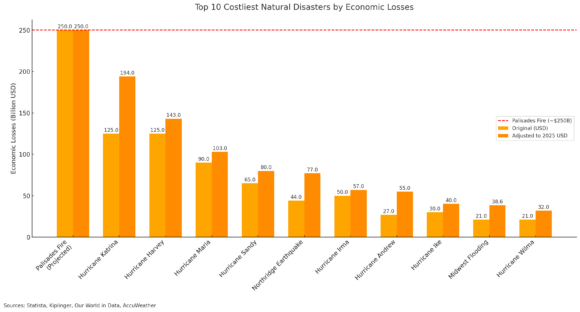
Preliminary estimates peg the financial toll at over $250 billion, with insured losses alone surpassing $30 billion, making this the most expensive wildfire occasion in world historical past. As of January 14, 25 lives have been misplaced, with a whole lot of accidents, together with a firefighter battling life-threatening accidents. Almost 150,000 residents have been evacuated, their futures unsure as California grapples with the aftermath.
A Shifting Panorama of Insurance coverage Protection
The monetary implications of this disaster lengthen far past the fast restoration. The fires have exacerbated an already strained insurance coverage market, impacting availability and affordability for customers.
The exodus of main insurers and coverage non-renewals have left many householders counting on the California FAIR Plan, the insurer of final resort. From 2023 to 2024, the variety of FAIR Plan insurance policies surged, with residential publicity ballooning from $271 billion to $431 billion.
The pressure on the FAIR Plan’s solvency is obvious, significantly with its $6 billion publicity in high-risk areas like Pacific Palisades. Concurrently, reinsurance charges have soared by as much as 50%, driving premium will increase that additional burden owners.
Whereas the fast results are most pronounced in California, the broader insurance coverage market can be impacted. Insurers working nationally could reassess their publicity to wildfire dangers, resulting in changes in protection availability and pricing in different states with comparable vulnerabilities. Moreover, the reinsurance market’s response to those occasions can affect world pricing and capability.
California’s insurance coverage woes spotlight a deeper systemic problem: the interdependence of insurance coverage and threat administration. As insurers retreat from high-risk areas, it’s incumbent on state and native governments to step in with proactive measures to mitigate dangers and cut back the severity of catastrophic losses. This disaster underscores the necessity for California to mobilize its full arsenal of instruments to deal with the rising wildfire menace.
California’s Wildfire Mitigation Funds
The effectiveness of wildfire mitigation hinges on the adequacy and clever allocation of assets. California’s firefighting capabilities have seen important investments lately.
Gov. Gavin Newsom’s administration has elevated CalFire’s funds from $2 billion to $3.8 billion since 2019, reflecting a dedication to enhancing the state’s wildfire resilience. Nonetheless, the $101 million lower to wildfire prevention funding for the 2024–25 fiscal 12 months has raised considerations in regards to the sufficiency of those efforts.
California possesses a strong toolkit to fight wildfires, however its deployment requires coordinated motion at each stage of presidency.
State-level measures
- Legislative help. Legal guidelines like SB 901 (2018) and AB 38 (2019) have laid the groundwork for vegetation administration and residential hardening packages. Nonetheless, bureaucratic delays have hampered their full implementation. Expediting these efforts is important.
- Government orders. Gov. Newsom’s 2019 Government Order N-05-19 prioritized wildfire prevention initiatives, fast-tracking efforts in susceptible areas. Increasing comparable directives may bolster statewide preparedness.
Native-level methods
- City planning. Revising zoning legal guidelines and mandating fire-resistant development can considerably cut back vulnerabilities in high-risk areas. Ventura County’s Hearth Secure Constructing Code stands as a mannequin for different jurisdictions.
- Group engagement. Packages like Firewise USA empower communities to create localized wildfire mitigation plans, fostering resilience on the neighborhood stage.
Utility partnerships and infrastructure upgrades
- Modernizing energy grids. Accelerated efforts to bury energy strains and set up weather-resistant infrastructure, as required by AB 1054 (2019), are among the many upgrades very important to lowering ignition dangers.
- Early detection techniques. Investments in know-how together with satellite-based hearth monitoring and AI-enabled predictive fashions can improve early warning capabilities and useful resource allocation.
Emergency preparedness
- Coaching and deployment. Increasing the coaching of firefighters and first responders helps be sure that California can meet the calls for of more and more frequent and extreme wildfires.
- Useful resource investments. Constructing a bigger fleet of aerial firefighting tools and enhancing evacuation logistics are essential parts of an efficient response technique.
Regardless of these instruments and techniques, gaps stay. Fragmented coordination between state and native governments continues to hinder effectivity. Superior wildfire detection applied sciences stay underfunded, and inconsistent funds allocations threat undermining long-term resilience. Addressing these gaps requires sustained dedication and collaboration amongst policymakers, business stakeholders, and communities.
The Position of Public-Personal Partnerships
Addressing California’s wildfire disaster may even require leveraging the strengths of each the private and non-private sectors. Public-private partnerships (PPPs) supply a strong framework to pool assets, experience, and innovation to mitigate wildfire dangers and improve restoration efforts.
Personal firms can contribute considerably by way of know-how and infrastructure investments. For instance, partnerships with know-how corporations can facilitate the deployment of superior wildfire detection techniques, reminiscent of satellite-based monitoring and AI-driven predictive modeling. These instruments can improve early warning capabilities and enhance useful resource allocation.
Utilities additionally play a essential position. Collaborative packages between the state and utility firms, reminiscent of PG&E’s ongoing efforts to underground energy strains in high-risk areas, exhibit how shared investments can cut back ignition dangers.
Equally, development and engineering corporations can companion with native governments to rebuild with fire-resistant infrastructure and implement zoning adjustments that prioritize security.
The monetary sector is one other key companion. Insurers and reinsurers can work with the state to develop progressive risk-sharing mechanisms and incentivize owners to undertake fire-resistant measures. Grants or subsidies for house hardening and group preparedness initiatives can amplify these efforts, bolstering participation and resilience.
By fostering collaboration throughout industries, California can speed up the tempo of wildfire mitigation and restoration, leveraging the experience and assets of the non-public sector to enrich public initiatives.
Classes Discovered: Downstream implications
The aftermath of California’s wildfires reaches far past the charred landscapes and destroyed properties. These occasions spotlight extreme downstream implications for housing, agriculture and public well being, emphasizing the interconnectedness of wildfire impacts on society.
- Housing. The destruction of properties in high-value areas like Pacific Palisades exacerbates California’s ongoing housing disaster. With the state already grappling with a scarcity of reasonably priced housing, the lack of these residences is more likely to drive up property costs and rents in unaffected areas. This shift could deter future growth in fire-prone areas, additional straining housing availability.
- Agriculture. The fires have decimated farmland and vineyards, lowering crop yields and impacting native economies and provide chains. Smoke publicity may degrade the standard of produce, resulting in monetary losses for farmers and downstream results on meals availability and pricing.
- Public well being. Hazardous air high quality ranges throughout Los Angeles and surrounding areas have resulted in widespread respiratory points. Weak populations, together with kids and the aged, are significantly in danger, with long-term well being penalties more likely to emerge from extended publicity to nice particulate matter. Moreover, stress and displacement brought on by evacuations contribute to psychological well being challenges.
Understanding and addressing these downstream results is important for California to completely recuperate and construct resilience towards future crises.
Classes Discovered: Insurance coverage and Danger Administration
The Palisades Hearth illustrates the intricate relationship between insurance coverage and threat administration. When non-public insurance coverage markets limit protection or make costs prohibitive for customers attributable to solvency, profitability, or reinsurance capability limitations, that’s the place threat administration comes into play.
California can use threat administration methods in three key areas to cut back reliance on insurance coverage payouts:
- Wildfire prevention. Increasing vegetation administration, upgrading utility infrastructure and deploying superior detection techniques can considerably cut back wildfire dangers.
- City planning. Strengthening constructing codes and revising zoning rules can shield properties and cut back future losses.
- Emergency preparedness. Enhancing firefighter coaching, useful resource allocation and group preparedness ensures a swift and efficient response to disasters.
Shifting Ahead With Optimism
As Los Angeles prepares to host the 2028 Olympics, my house of California faces a defining second. The state has a chance to remodel its wildfire mitigation efforts into a world mannequin of resilience and innovation. By addressing gaps in funding, leveraging know-how and fostering collaboration at each stage, California can rise from the ashes of this disaster stronger and extra ready.
The highway forward won’t be simple, however the resolve of Californians mixed with decisive motion offers a beacon of hope. Collectively, we are able to guarantee a safer, extra sustainable future for our communities.
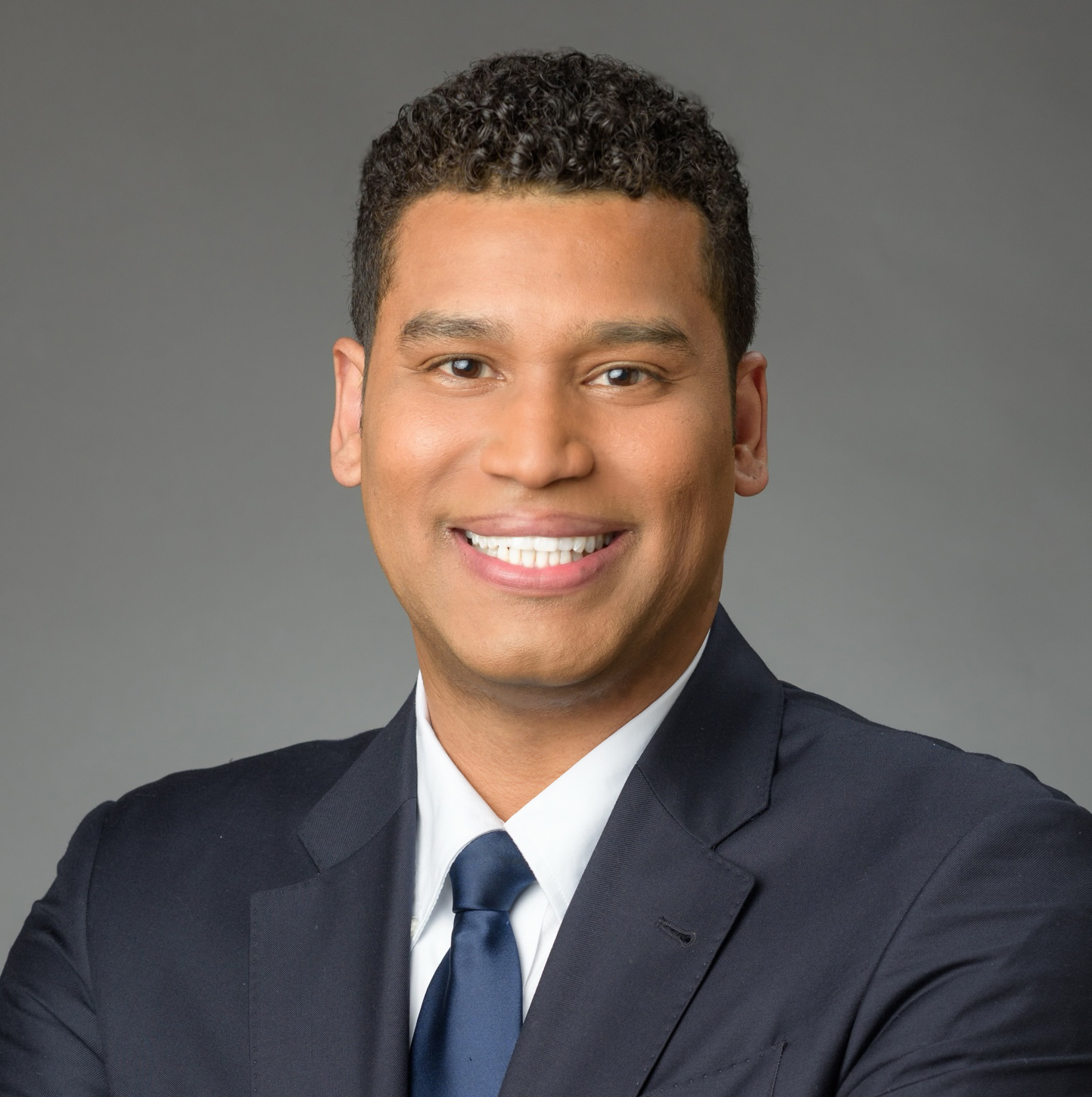
Lee is an actuary, content material creator and public speaker recognized to the insurance coverage group by his podcasting moniker, The Maverick Actuary. He has 13 years of property/casualty expertise in North America, and he’s a senior options advisor at information and AI agency SAS.

