


In Life Expertise, Inc. v. Harleysville Insurance coverage Firm, 2024 WL 3792261 (D. Mass. 2024), the District Court docket of Massachusetts discovered that “collapse” provisions inside a industrial property coverage had been ambiguous the place a ground merely sagged with out utterly falling to the bottom.
Background
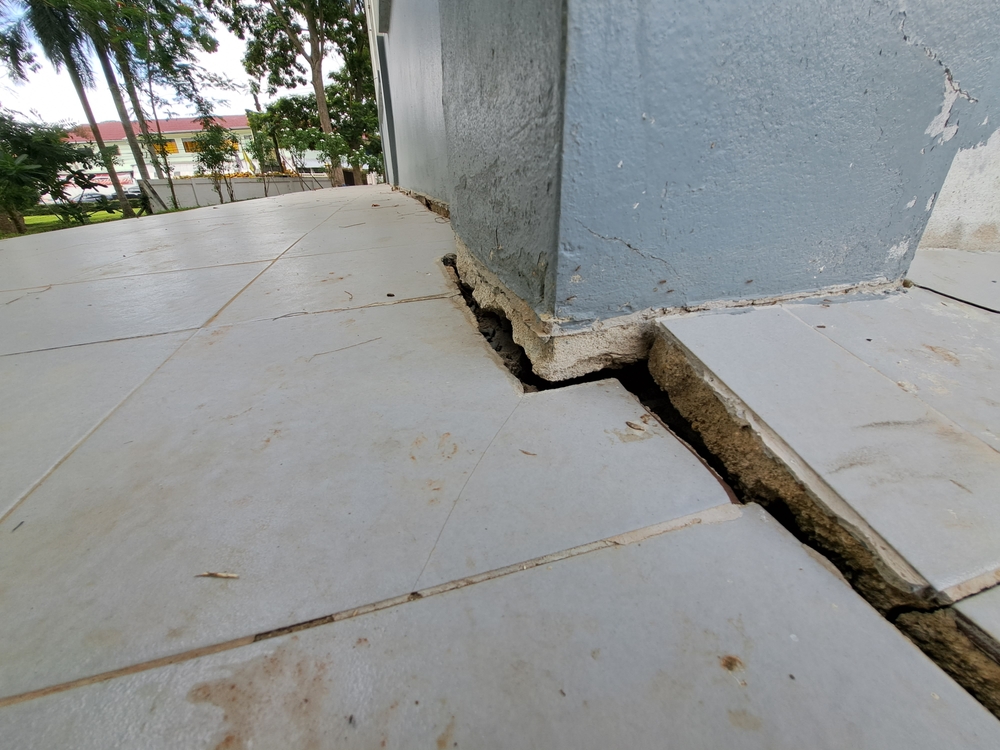
The plaintiff-insured offered residential and day habilitation providers in a property lined by a industrial package deal insurance coverage coverage issued by the defendant-insurer. Throughout the coverage interval, the insured’s ground “sunk” between eight to 12 inches. Particularly, the insured famous that the “ground had sagged, was bouncing, and {that a} part of the ground had partially indifferent from the Property’s exterior wall.” This prompted the insured to submit a declare. Following its investigation, the insurer denied protection based mostly on the conclusion that “[the] loss was brought on by long run deterioration of the timber beams within the crawl house as a result of moisture,” a situation not lined beneath the coverage.
The Coverage
As a result of collapse was a typically excluded reason behind loss, the insured relied on an extra protection provision, which supplanted the collapse exclusion, and reinstated protection as follows:
D. Further Protection – Collapse
The protection offered beneath this Further Protection – Collapse applies solely to an abrupt collapse as described and restricted in D.1. by D.7.
- For the aim of this Further Protection – Collapse, abrupt collapse means an abrupt falling down or caving in of a constructing or any a part of a constructing with the end result that the constructing or a part of the constructing can’t be occupied for its supposed objective.
- We pays for direct bodily loss or harm to Lined Property, brought on by abrupt collapse of a constructing or any a part of a constructing that’s insured beneath this Protection Kind or that comprises Lined Property insured beneath this Protection Kind, if such collapse is brought on by a number of of the next:
- Constructing decay that’s hidden from view, except the presence of such decay is thought to an insured previous to collapse.
Evaluation
In figuring out whether or not the insured’s loss certified as a “collapse” beneath the phrases of the coverage, the Court docket turned to the language of the coverage, which acknowledged that the extra protection for collapse solely utilized to an “abrupt collapse.” The coverage outlined “abrupt collapse” as “an abrupt falling down or caving in of a constructing or any a part of a constructing or any a part of a constructing with the end result that the constructing or a part of the constructing can’t be occupied for its supposed objective.”
The insurer argued that the harm to the ground didn’t meet the coverage’s definition of “abrupt collapse” as a result of it didn’t utterly fall to the bottom. Though the ground had partially indifferent from the property’s exterior wall, it remained standing. The insurer additional famous that the insured’s personnel walked on the flooring after the incident occurred.
Alternatively, the insured argued that its harm was a “collapse” as a result of the extra protection’s provision included partial collapse and didn’t specify a minimal vertical displacement to qualify as a collapse. The insured identified that the ground was in a “state of structural failure” and indifferent from the outside wall as a result of its structural members being severely decayed. Thus, beneath the insured’s interpretation, on the very least, a part of a constructing (i.e., the indifferent portion of the ground) suffered an “abrupt collapse,” as a result of the harm was surprising, and the insured had no information of the hidden decay previous to the incident.
In sum, the Court docket famous that each events supplied cheap interpretations of the collapse provisions as utilized to the details. Typically, ambiguities in insurance coverage insurance policies are construed towards insurers to offer protection. Accordingly, the Court docket held the language to be ambiguous and located within the insured’s favor. In doing so, it regarded to different jurisdictions the place courts analyzed almost similar coverage language and decided them to be ambiguous. Scorpio v. Underwriters at Lloyd’s, London, 2012 WL 2020168 (D. R.I. Jun. 5, 2012) (discovering a collapse provision ambiguous in context of six-inch roof deflection); Landmark Realty, Inc. v. Nice Am. Ins. Co., U.S. Dist. LEXIS 127718 (D. Md. Dec. 8, 2010) (discovering an “inside inconsistency” in an extra protection collapse provision the place a partial collapse resulted in a complete constructing turning into condemned and unsuitable for its supposed objective); Malbco Holdings, LLC v. AMCO Ins. Co., 629 F.Supp.second 1185 (D. Or. 2009) (noting that the collapse provision is ambiguous, however the “clear fashionable pattern” is to carry that collapse protection provisions present protection if there may be substantial impairment of the structural integrity of any a part of the constructing); Jemiola Trustee of Edith R. Jemiola Residing Belief v. Hartford Casualty Insurance coverage Co., 229 A.3d 84 (Conn. 2019) (discovering related collapse coverage language to be both ambiguous or unambiguous when utilized to totally different details).
The Court docket defined that the provisions within the further protection for collapse created inside inconsistencies that will have restricted protection solely to situations the place an insured’s constructing was in a “flattened kind or rubble,” thereby contravening what an objectively cheap insured would anticipate to be lined. It additionally instructed that if the insurer supposed for a collapse to require your complete constructing to fall to the bottom instantly, that ought to have been explicitly outlined within the coverage.
Conclusion
Life Expertise demonstrates that the time period “collapse,” generally included in numerous industrial property insurance policies, can doubtlessly be topic to conflicting interpretations relying on the circumstances surrounding a loss and the relevant jurisdiction’s case regulation. Whether or not the construction skilled a minor deflection or crumbled to the bottom, courts will take into account the coverage language as an entire to find out whether or not the time period “collapse” has been triggered. This case additionally reinforces the necessity for insurers to conduct well timed and complete investigations to find out all causes of loss.
About The Authors

